
Support the jaw. Muscle balance. Life feels easier.
Jaw tension that won’t go away? TMJ muscle support that retrains the muscle habits behind clenching, grinding and jaw strain—here in Ottawa.
Give your jaw a real rest.
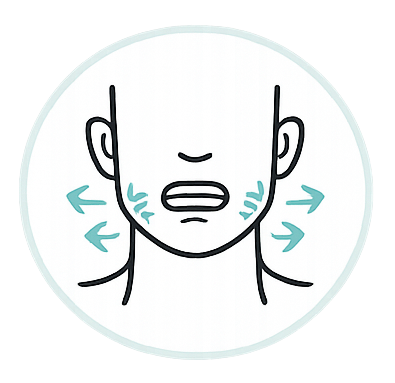
The Pattern
Clenching and bracing can become your default—often without you noticing—until it shows up as tension, fatigue, or discomfort.
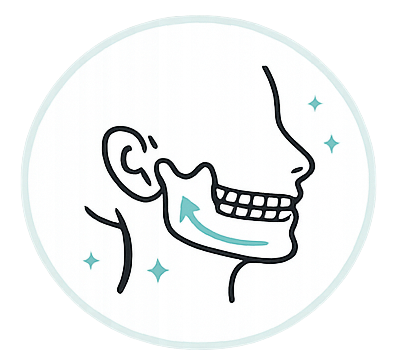
The Skill
We teach practical awareness and retraining: tongue posture, jaw rest position, breathing habits, and functional coordination.
The Plan
You get a clear plan with simple steps, coaching, and progress tracking.
Built around your specific patterns and goals.
Is This You?
Jaw tension or tightness (daytime, mornings, or after work)
Clenching, grinding (bruxism), or bracing during focus, driving, exercise, or stress
Jaw feels “stuck” on waking (you have to work it open)
Locking, catching, or limited opening (even if it releases)
Headaches, temple tightness, or facial fatigue
Jaw gets tired with longer chewing (gum, tougher foods, or even easier foods)
Clicking, popping, crackling, or “squishing” sounds (with or without discomfort)
Neck or shoulder tension that feels linked to your jaw
*If any of this sounds like you, it may be a retrainable muscle pattern.
60-Second Self-Check

Sit tall. Let your shoulders drop. Lips together.
Ask yourself: does your jaw feel like it’s doing any work to be “at rest”?
Your jaw at rest should feel quiet and effortless—no holding, bracing, or pressure.
If it feels like work, that can be a common clenching/bracing pattern we can work with you to retrain.
What We Do
Jaw Rest Position (Baseline)
Goal: Reduce default clenching/bracing and give the jaw a true “rest.”
How: Teeth apart cues, lip seal guidance, tongue-up posture, awareness resets throughout the day.
Clenching & Grinding Habit Retraining
Goal: Catch the moments your jaw turns “on” and retrain the pattern.
How: Trigger mapping (focus/stress/screens/exercise), replacement habits, daytime bite awareness, nighttime habit support.
Tongue Posture & Palatal Support
Goal: Improve tongue position that supports a calmer jaw system.
How: Tongue-to-palate placement, stability drills, suction hold coaching, functional integration.
Swallow Pattern & Muscle Coordination
Goal: Tongue-to-palate, lip seal, calm jaw support.
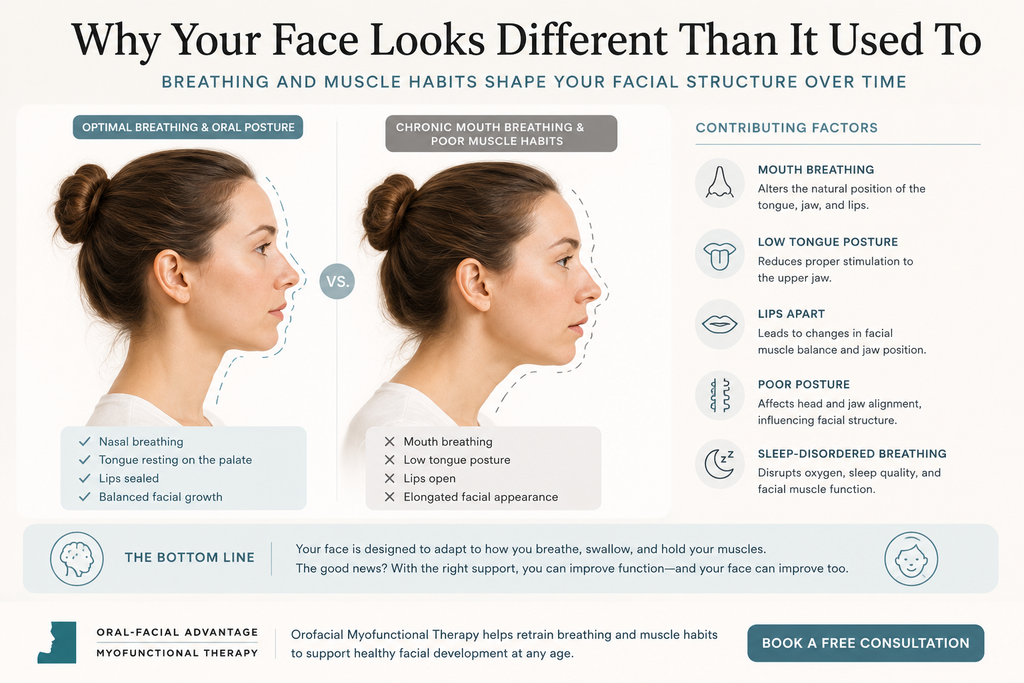
How: Rest tongue gently suctioned on the palate, lips lightly together, teeth slightly apart; breathe through the nose.
Chewing Mechanics & Jaw Efficiency
Goal: Build balanced, efficient chewing without overload.
How: Chew pattern coaching, side-to-side symmetry, pacing, fatigue thresholds, food strategy.
Neck/Shoulder + Jaw Link (Tension Patterns)
Goal: Reduce top-down tension that feeds jaw bracing.
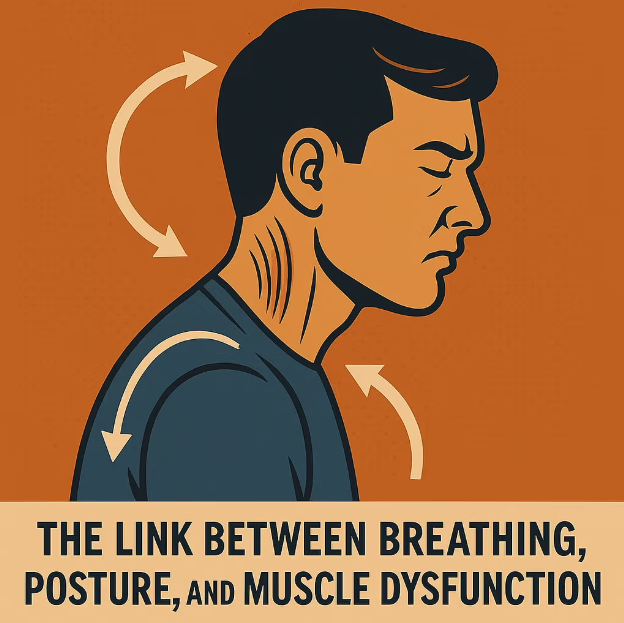
How: Posture cues, breathing pattern awareness, gentle release strategies, coordination with allied providers when helpful.
Try This
Goal: Turn the jaw “off” for 30 seconds.
How: Suction your tongue on the roof of your mouth, lips together, teeth slightly apart. Exhale softly. Repeat 3 times.
Struggling With This
TMJ Muscle Support Benefits of Orofacial Myofunctional Therapy

Lower jaw muscle load
Less constant “holding” through the day.
Less pressure on sensitive structures
Reducing muscle strain can potentially ease irritation around nearby nerves and blood vessels.
Smoother jaw movement
Opening and closing can feel more fluid and controlled.
Less TMJ load from micro-movements
Fewer tiny, repeated jaw movements can mean less cumulative joint stress.
More comfortable chewing
Better efficiency can reduce fatigue with tougher foods or longer meals.
Less end-of-day jaw fatigue
More energy left in the jaw after work, screens, and talking.
Fewer tension flare-ups
Less “snowballing” tightness once the jaw gets triggered.
Calmer face and temples
Reduced overwork in the surrounding muscle system.
Better morning feel
Less tightness on waking; an easier start to the day.
Your TMJ Muscle Support Plan
Simple daily skills. Real-life comfort.
1 Free Consultation
We listen to your concerns (jaw tension, clenching, headaches, clicking) and explain how TMJ muscle support works. You’ll learn what we do and whether it fits your goals. Clear next steps, no pressure.
2 Assessment & Baseline Exam
A detailed look at your jaw function patterns: rest posture, clenching triggers, range of motion, chewing/swallow coordination, and related neck/face tension. We map what’s driving the strain and what to focus on first.
3 Tailored Treatment Plan
We organize your findings into a clear plan: what’s happening, why it’s persisting, and what we’ll retrain. Your plan includes simple micro-routines, frequency, and how we’ll measure progress.
4 Coaching & Progress
Step-by-step exercises and habit coaching you can do daily (2–5 minutes at a time). We review, fine-tune/adjust according to your muscle's response, and progress as your jaw feels calmer, movement gets smoother, and flare-ups reduce over time.
What Is Orofacial Myofunctional Therapy?

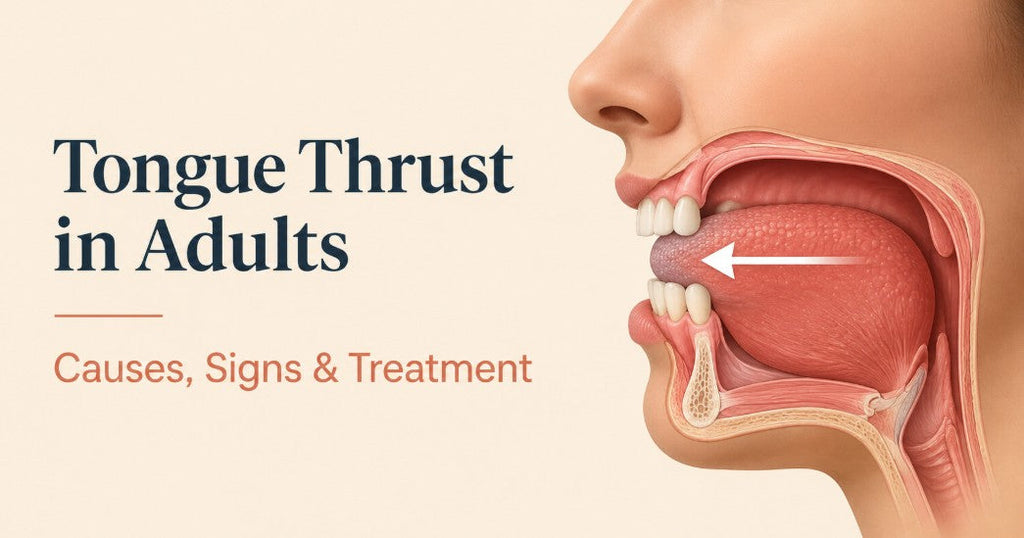
Orofacial Myofunctional Therapy is focused “muscle and habit” training for the tongue, lips, jaw, and face. For TMJ muscle support, we look at how your jaw rests, how often it braces or clenches, and how the surrounding muscles coordinate during chewing, swallowing, speaking, and sleep. When these patterns are inefficient, the jaw muscles can stay overactive—showing up as tension, fatigue, and flare-ups.
Therapy starts with a detailed assessment of your jaw function patterns (rest posture, opening and closing mechanics, clenching triggers, chewing and swallow coordination, and related neck/facial tension). Then we build simple, targeted exercises and micro-routines you weave into daily life—during focus, driving, workouts, and sleep. By retraining the baseline and reducing unnecessary effort, many people experience smoother jaw movement, less daily strain, and a calmer jaw system over time.
Frequently asked questions
What is TMJ muscle support?
Can Orofacial Myofunctional Therapy help with clenching or grinding?
Why is my jaw worse in the morning?
What does therapy involve?
What if my jaw clicks, pops, or crackles?
What if my jaw locks or catches?
How soon will I feel a difference?
Is this a replacement for dental care, physiotherapy, or a night guard?
What ages do you treat?
Ottawa, Ontario Clinic
1335 Carling Ave, Unit 560
Ottawa, Ontario
Monday to Saturday: 9AM to 5PM
You are in advanced mode.
You can turn it off in left sidebar. To use advanced options, you will need to enter your own Google Maps API Key.
Get Google API Key
By Jul 15, 2026

By Jan 04, 2026