Forward Head Posture, Neck Pain, and the Forgotten Role of the Tongue and Orofacial Myofunctional Therapy (Ottawa 2025)
How poor oral posture affects head alignment, breathing, and long-term comfort—plus what you can do naturally to correct it.
“When the tongue rests low in the mouth, the head tends to shift forward to maintain airway patency. This posture can strain the cervical spine and increase neuromuscular tension.”
— Journal of Oral Rehabilitation, 2023
Audience: Adults with forward head posture, neck tightness, or jaw fatigue—especially those who notice they clench their teeth, mouth breathe, or wake with headaches. This post also supports chiropractors, RMTs, and other professionals looking for muscle-based solutions to posture issues.
Read time: 5 minutes
Key takeaway: Low tongue posture and mouth breathing can silently distort your head and neck alignment—leading to chronic jaw strain, forward head posture, and upper body tension. Retraining the tongue through Orofacial Myofunctional Therapy can restore natural support, ease pain, and improve posture at the root.
Why Mouth Breathing Can Pull Your Head Forward
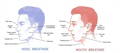
When you breathe through your mouth, your tongue drops to the floor of your mouth—no longer supporting the palate or helping keep your airway open. As a result, your head naturally shifts forward to compensate.
This posture keeps the airway from collapsing, but it creates a chain reaction:
Overuse of neck and jaw muscles to hold the head up

Compression through the cervical spine
Tension in the upper back and shoulders

Headaches, TMJ strain, and long-term postural fatigue
The Link Between Breathing, Posture, and Muscle Dysfunction
Your tongue isn’t just a speech muscle—it’s a postural one.
When it rests against the roof of your mouth, it helps anchor the head, maintain proper jaw alignment, and regulate pressure through the cranial base. But if it hangs low (often due to mouth breathing or tongue tie), the neck and upper back take over.
This can lead to:
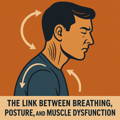
Forward head posture:
Chin juts out and cervical spine curves abnormally. Also affects facial symmetry.
Tight SCM and suboccipitals:
These muscles try to stabilize your head all day.
Poor diaphragmatic breathing:
Chest and neck dominate the breath instead of the diaphragm.
TMJ and jaw strain:
Jaw muscles clench to stabilize misaligned structures.
What Orofacial Myofunctional Therapy Does For Posture
Orofacial Myofunctional Therapy helps retrain the tongue, lips, and jaw to support better head and neck posture. It focuses on:
✅ Restoring nasal breathing as your default pattern
✅ Getting the tongue suctioned up to the palate at rest
✅ Strengthening deep core postural muscles reinforced with diaphragmatic breathing
✅ Rebalancing jaw and airway muscle tone
✅ Improving head alignment naturally—without braces, splints, or surgery
Can This Replace a Chiropractor or Massage Therapist?
No—but it fills the missing piece.
If you’ve been adjusting the neck weekly but it keeps falling back into old patterns, a weak tongue and low oral posture may be to blame. Adding Orofacial Myofunctional Therapy can create lasting change that holds your adjustments longer and reduces tension at the root.
A Natural Tool—Backed by Science
Studies link oral posture with cervical posture, TMJ stability, and even spinal alignment.
One 2023 review found that patients with chronic neck tension were significantly more likely to be mouth breathers with weak tongue posture and poor nasal airflow. Improving function at the source—the tongue—reduced reliance on pain relief and improved long-term outcomes.
Ready to Realign Naturally?
The Process of Orofacial Myofunctional Therapy
We begin with a detailed assessment, then build a custom therapy plan using clear goals and targeted exercises.

Initial Assessment
Jaw function, tongue strength, oral habits, head/neck alignment

Customized Exercise Plan
Breathing, posture, and swallowing training with progress tracking

Regular Progress Reviews
Adjustments every few weeks to keep therapy effective and motivating

Collaboration with Healthcare Providers
We work with your RMT, chiropractor, or dentist to align your care
Book a free 45-minute consultation to see if Orofacial Myofunctional Therapy is right for your posture.
Frequently Asked Questions
1. Can myofunctional therapy fix my posture?
Yes. Orofacial Myofunctional Therapy improves posture by retraining tongue position, breathing patterns, and facial muscle balance—key drivers of head and neck alignment. As these patterns normalize, the head naturally stacks more easily over the spine, and results are often enhanced when combined with bodywork or physical therapy.
2. How is this different from jaw physiotherapy?
Jaw physiotherapy typically focuses on improving TMJ movement, and restoring comfortable joint mechanics. Orofacial Myofunctional Therapy retrains and balances the muscles of the head, neck, tongue, and jaw to work with your unique bone structure. By addressing root causes such as tongue and jaw posture, breathing patterns, and oral habits that influence the entire cranial base—not just the joint—therapy builds subconscious, beneficial muscle patterns that support long-term stability rather than temporary relief.
3. Do I need a referral?
Nope! You can book directly. Book Your Free Consultation Here
4. Will this help with my jaw pain and tension headaches?
Yes—if your symptoms are related to tongue dysfunction, imbalanced facial muscles, repetitive oral habits, forward head posture, or poor nasal breathing, Orofacial Myofunctional Therapy often helps significantly.
🧠 References
1. Graber LW, Vanarsdall RL, Vig KWL.Orthodontics: Current Principles and Techniques. 6th ed. Elsevier; 2017.
→ Describes how low tongue posture contributes to forward head posture and altered craniofacial development.
2. Cuccia A, Caradonna C. The relationship between the stomatognathic system and body posture. Clinics. 2009;64(1):61–66. doi:10.1590/S1807-59322009000100010
→ Reviews how dental occlusion and tongue position influence head and neck alignment.
3. Villa MP, Evangelisti M, Martella S, Barreto M, Cecili M, Ambrosio R, Malagola C. Can myofunctional therapy increase tongue tone and reduce symptoms of sleep-disordered breathing in children? Sleep Breath. 2017;21(4):1025–1032.
→ Demonstrates tongue strengthening improves airway stability and related postural compensation.
4. Yoon A, Zaghi S, Ha S, Law CS, Guilleminault C, Liu SYC. Toward a functional definition of ankyloglossia: Validating current tools and introducing a new objective measure. Laryngoscope Investigative Otolaryngology. 2017;2(6):277–288.
→ Discusses how restricted tongue mobility can affect head posture and neuromuscular strain.
5. Okuro RT, Morcillo AM, Ribeiro MÂ, Sakano E, Schivinski CI. Mouth breathing and forward head posture: A systematic review. Journal of Human Growth and Development. 2020;30(3):355–363.
→ Systematic review linking chronic mouth breathing to forward head posture in children and adults.
6. Guilleminault C, Huang YS, Monteyrol PJ, Sato R, Quo S, Lin CH. Critical role of myofascial reeducation in pediatric sleep-disordered breathing. Sleep Medicine. 2013;14(6):518–525.
→ Explains the role of orofacial muscle tone and posture in breathing-related craniofacial development.
7. Huggare J. Postural disorders and dentofacial morphology. Acta Odontol Scand. 1998;56(6):383–386.
→ Found a strong correlation between poor head posture and dental/facial structure deviations.
8. Kumar S, Kothari M. Assessment of forward head posture and associated symptoms in people who mouth breathe. Indian Journal of Otolaryngology and Head & Neck Surgery. 2022;74(Suppl 1):89–95.
→ Found increased incidence of neck pain and tension headaches among mouth breathers with forward head posture.